Wednesday, March 23, 2011

Exploring Cheekwood Botanical Gardens in Nashville


We went to Nashville to visit our daughter for several days. While there we decided to explore the Cheekwood Botanical Gardens. Christopher T. Cheeks and his wife moved to Nashville in 1880. Their cousin, Joel Cheek, developed a superior blend of coffee which was popular in the best hotel of Nashville, called the Maxwell House Hotel. This hotel had been built by Colonel John Overton and named for his wife Harriett Maxwell. The Cheek family was an investor in the coffee. In 1928, Postum (now called General Foods) purchased the Maxwell House coffee brand for more than $40 million. The Cheeks‘ investment had given them good return and they purchased 100 acres in West Nashville for a country estate. The estate, completed in 1932, included a 30,000 square foot Georgian-style mansion and extensive formal gardens which became Cheekwood. Cheekwood opened to the public in 1960. Cheekwood Gardens is a community leader in conservation and reclamation. They removed invasive exotic species and replaced them with many native plant colonies.


Map of Cheekwood gardens from my brochure


In Nashville they call the estate “the house that coffee built.” The 55-acre garden (220,000 m2) has great horticultural diversity. There are 10 specialty display gardens. The mansion can be visited too but we did not. This will be for a future visit. When we arrived and parked in Parking Lot B, in the center of the map above, we saw a great number of people with dogs. This was the “Cover Dog Search” sponsored by the Nashville Lifestyles magazine. The winning entry will be featured on the cover of the May issue of the magazine.


There was a long line of dog owners with their pets. So many dogs! tiny to huge, all different breeds and colors.

Click on collage then click on each picture to enlarge

When they reached the top of the line a photographer would take the picture of the dog, with its number. The magazine readers can vote online for their favorite dog (you can look at the dogs here– my favorite is no. 175.)


We left the crowd and walked toward the reflecting pool.


From there we could hear many frogs croaking. We walked down to this frog pond to see if we could watch the frogs.


My! I have never seen so many frogs – swimming, croaking and courting.


One frog jumped near my husband and he caught it for a little while so our grandsons could look at it closer – they were fascinated.


Then the little boys ran up a meadow to look at the lions which we could barely see on top of the hill.


The lions were looking toward the mansion – keeping an eye on it I guess.


The meadow was covered with tiny wild flowers; daffodils and narcissi could be seen here and there.


I called my grandsons to tell them that I had seen a rabbit – so they came running – but what a rabbit…


Actually this is a sculpture called “Crawling Lady Hare” by Doug Hollis. The brochure says “We may expect art to show what is real – but who is to say our visions and dreams are not?” This artwork is part of the Carell Woodland Sculpture Trail. But we were walking toward the Japanese Garden, so I’ll follow this trail another day.


The Japanese Garden was peaceful and lovely – such a soothing place. I could have stayed there a long time.


It was a very warm afternoon – 85 degrees (29 -1/2 C) but not humid. Everywhere I looked was another photograph begging to be taken – and I did – now it is hard to decide which ones I should show here. Ahead were many beautiful magnolias. By the way, the magnolia has about 210 species and it was named after French botanist Pierre Magnol (1638-1715.) Pierre was born in Montpellier, a city in the south of France. His father was a pharmacist and his mother came from a family of physicians. Pierre enrolled at the old University of Montpellier (founded in 1289) where a botanic garden had been established in 1593 by King Henry IV of France. Magnol invented the concept of plant “families.” He wrote several treatises allowing rapid plant identification. Up to then it was believed that all species had arrived on earth by “divine creation.”


Our grandsons had run ahead toward the colorful pansy beds. I took their picture, then, a little girl stood in front of me and asked if I would take her photo, too. I was pleased to oblige. Her name was Katy – see her below.


These pansies were very small but so pretty. There were other flowers and flowering bushes too.


A couple of sphinxes were at the end of the pansies walkway.


Ahead were more varieties of magnolias. Some of their names were: Jon Jon, Ann May, Western Lily, Saucer, Elizabeth.


Some had great fragrances.


There were some inviting stairs, going… where? No, my knees would not make it back.


The grandsons had found a fountain and were studying its contents.


Further on there was an herb garden.


Upon entering the Visitor Center we were greeted by large indoor plants and a lovely sculpture of 3 children.


There was an Orchid Show in the adjoining hall and it was a lovely display.


In summer they also have “Live at Cheekwood Gardens.” Last July Joan Baez gave a concert there.


Joan Baez playing at Cheekwood Botanical Gardens on 29 July 2010

There was so much more to see at Cheekwood Gardens and Museum of Art – I’d love to visit the mansion and look at the many paintings, drawings and sculptures in the museum. That will be for another time. The gardens were amazing though, and I did not see them all.


Postcard copyright Anderson Design Group


Wednesday, March 16, 2011

Spring


Last Sunday I intended to publish another post on Hawaii, but I did not. My pictures of beautiful beaches and the calm blue Pacific Ocean seemed so far away from current events. I was also dealing with some health issues. But my issues are insignificant compared to the heartbreaking devastation the people of Japan are enduring. The magnitude of the disaster which keeps growing is unbearable and our hearts grieve at all the suffering we see. Doctors Without Borders/Médecins Sans Frontières (MSF), the organization I support, has sent teams to Japan. You can read about it here and click on “Donate Now” if you are able or donate to another worthy charity. The Japanese people are resilient and have a great culture of compassion – I hope this will help them in the turmoil they face. It is hard to express our sorrow but life goes on. In 2011 spring starts on Sunday March 20th - I hope this new season will bring some comfort to all.


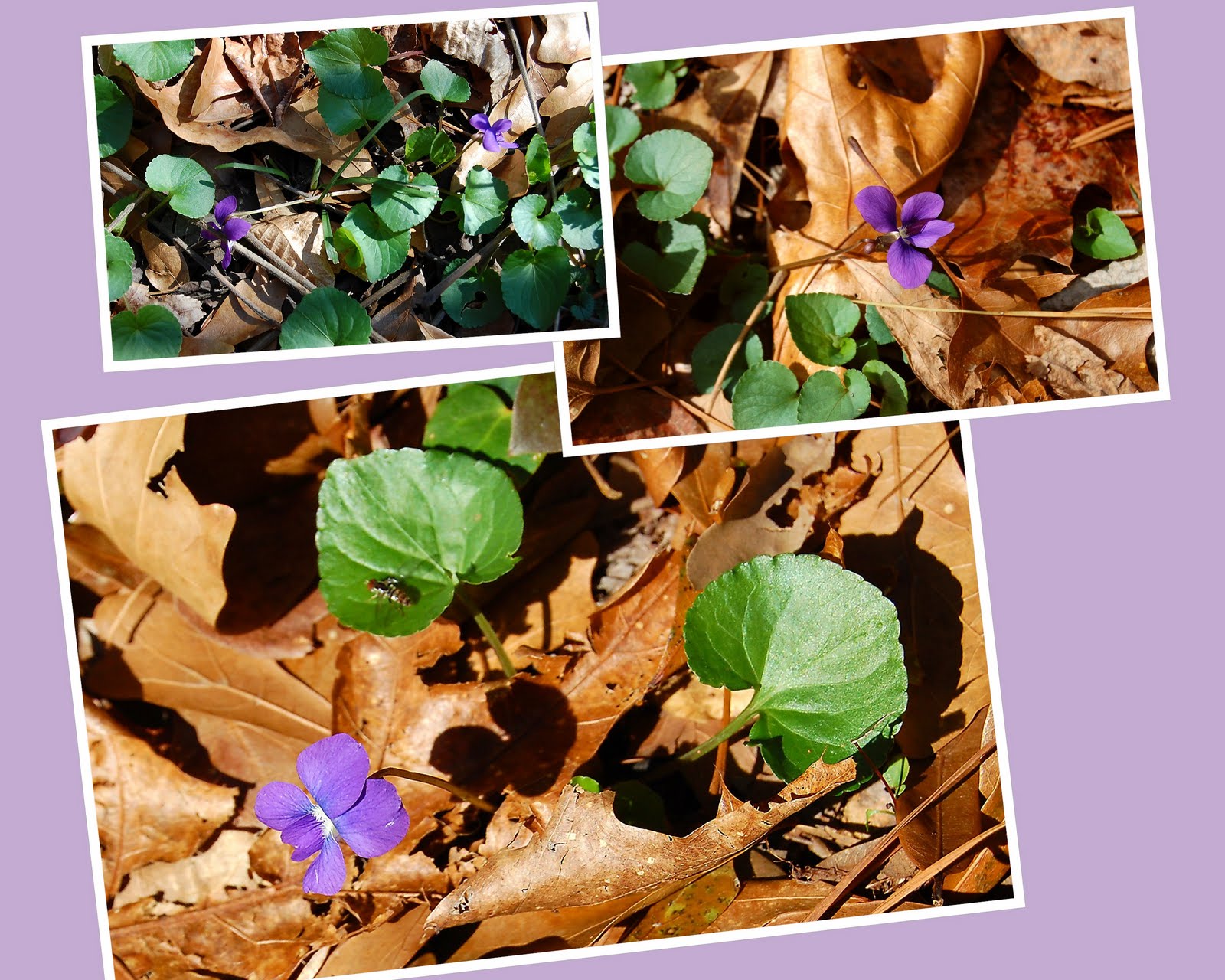
Under a sunny sky and warm weather - we expect the temperature to be 77 degrees (25 C) by tomorrow – I took my cameras to witness some signs of spring. Our dogwood trees are not flowering yet but our Oregon Holly bushes still had some of the minute yellow blossoms which are so fragrant and much loved by birds.


Click on collage to enlarge, then click on individual picture to biggify

Petite violets are coming up through the dead leaves.


Across the street our neighbors’ forsythia was in full bloom. Another shrub with dark pink blossoms was next to it, but I do not know its name.


Going down the street I could see, several houses down, a large tree covered with white blossoms.


I don’t have a macro lens on my camera but I still tried to get as close as possible to the blossoms to see them better.


Another tree was covered with a multitude of tiny pink blossoms


and the daffodils have been blooming for a while.


Yes, spring is here. How I wish it were the same in Japan. Below is a postcard I purchased when I visited Tokyo years ago with my daughter.


Postcard of cherry blossoms by Masami Nakamura (1907-1993)


I thought a collection of haiku poems composed by Japanese writers would complement these pictures and spring.


First day of spring--
I keep thinking about
the end of autumn.

-Matsuo Basho, Japanese, 1644-1694


Old print showing Matsuo Basho

Matsuo Basho was a Japanese writer, descendant of samurai and a Buddhist monk. He is internationally renowned as a master of haiku. Many of his poems are reproduced on monuments and traditional sites in Japan. Here is another haiku written by him:

From all directions
Winds bring petals of cherry
Into the grebe lake.
-Matsuo Basho


Picture courtesy Missouri Botanical Japanese Garden


I caught a petal fallen from cherry tree in my hand.
Opening the fist

I find nothing there.

-Kyoshi Takahama 1874-1959


Weeping Yashino cherry tree


In the current of spring tide
A tuft of algae passes
Like an arrow.

-Hisajo Sugita 1890-1946


Spring Drum Bridge, courtesy Missouri Botanical Japanese Garden

French translation of above haiku


Dans le courant de la marée du printemps
Une touffe d'algues passe
Telle une flèche.

-Hisajo Sugita 1890-1946


Ono no Tofu with Willows and Weeping Cherry Blossoms, Circa. 1909
courtesy Kioto National Museum


A tribute to the people of Japan –


16th century Japanese painting of Kannon* Bosatsu,

* Kannon literally means "watchful listening," and is often translated as "the one who sees/hears all".


Kannon Bosatsu, or Kanseon, is the Japanese name of the Great Being of Compassion, Goddess of Mercy, assisting in times of difficulty and helping those in distress.


The horrific events in Japan show us again that life is precious and tragedy can strike suddenly. We all belong to this planet so what affects some of us really affects us all. We share their plight. We send our loving-kindness energy and healing thoughts to the Japanese people and also to those in the Pacific Rim who have been affected by this tragedy.


Sunday, March 6, 2011

Hawaii - Plantations and Usurpation


Green. We were in the interior of O’ahu, Hawaii, in February and everything around us was green: trees, grass, fields - apart from the colors from flowers or trees, like the orange flowers of the African tulip tree (Spathodea campanulata) and the soil which is as red as in Georgia. We saw beautiful shades of green - far indeed from the snow in the USA.


About 40 minutes from Honolulu driving down the Kamehameha Highway we went by large pineapple fields.


Then we arrived at the Dole Plantation. It is a large complex, set up mostly for tourists where a supersized gift store welcomes you. There are no free samples and everything is overpriced.


Click on collage to enlarge then click on each picture to biggify

There is also a garden maize, a little touring train, gardens and a restaurant. Various admission prices apply. We were told the plantation now only produces “boutique” pineapples, whatever that means since “une boutique” is the French word for “a shop.” Their crops also include coffee and chocolate.


I bought some postcards and mints. I also bought a tiny package of chocolate, the size of my index finger (priced at $6.) I was tempted by a jar of guava preserve but I cannot show you its picture as it was confiscated at the Los Angeles airport.


It started to rain so we left. This would be my shortest post if it were not for my usual habit of researching more about my subjects. In this case I thought I would read about the Dole Company. Well, I have been at it for a week now and it is fascinating. This reading opened a door on the history of Hawai’i as the Doles were connected with it from the beginning of the overthrow of the Hawaiian kingdom. I have learnt a lot about Hawai’i that surprised me and also about the USA - most of it painful. Growing up in France we had so much to study with French history, then the history of the rest of Europe that we barely studied the United States – the French and Indian wars, the War of Independence helped by the French, the Civil War and that’s about it.


US Empire, circa 1900

We never learnt about the US “empire” as such (this is what it is called) and establishment of US colonies like Hawaii, Guam, The US Virgin Islands, Northern Mariana Islands, American Samoa and Puerto Rico (Liberia, Cuba and the Philippines were given back.) I also did not know that Hawaii had its freedom curtailed unlawfully, that a silent coup deposed the queen (and imprisoned her in her own home.) Hawai'i was forcibly annexed and illegally made to become part of the Union (without native Hawaiian input).


The islands of Hawai’i being in the middle of the Pacific were isolated for centuries. They had a rich and successful culture. When in 1778 Captain James Cook arrived into Kauai he brought with him many diseases which almost wiped out the population. Then from 1820 to 1840 came 200 devout Christian missionaries ready to convert the heathen Hawaiians. This they did – not always for the good of the natives. They destroyed their native culture and forced them to deny all aspects of their heritage, because they said it was evil. The Hawaiians were forced to embrace the “superior” Christian Puritan American culture. Many Hawaiians died. Missionary Hiram Bigham (1789-1869) described them as “almost naked savages, whose heads and feet and much of their sunburnt swarthy skins are bare and appalling” and called them “stupid.” Even though he came from a nation enjoying separation of Church and State and the Bill of Rights, he proclaimed the 10 Commandments the code of laws.


Portrait of Hawaiian woman circa 1900 (courtesy of the Hawai'i State Archives)

Another missionary, Dr Gerrit Parmele Judd (1803–1873,) refused to have doctors inoculate the Hawaiians with an effective smallpox vaccine, instead forcing a cheaper alternative. As a result 5,947 died but Dr. Judd saved $60. The missionaries and their children started to buy land – for almost nothing (these were really land grabs.) This was followed by usurpation of political power. While in Hawaii the writer Herman Melville (best known for his work Moby Dick) railed against the Protestant missionaries who could have helped eliminate poverty, disease, starvation and death but instead preached moral values on Sunday and then acquired native land the rest of the week. Since he had sympathy for the Hawaiians, literary reviewers of the time advised their readers not to read his work.


Herman Melville (1819-1891), courtesy Wikipedia

Descendants of these missionary families still own large amounts of land in Hawaii. One of the missionary families was the Daniel Dole family. Their son, Sanford Dole (1844-1926), was instrumental in the illegal overthrow of the Hawaiian Kingdom. It ended the Native Hawaiian sovereignty through unconstitutional means. Sanford Dole appointed himself, with the help of a little group of American Missionary/businessmen, the first president of the forcibly imposed Republic of Hawaii from 1894 till 1900, then governor until 1903. This coup makes for interesting reading and I am still reading on it. I have ordered some books on the subject and will talk more about this in a future post.


Sanford Dole (1844-1926)

Several years later Sanford Dole helped his pastor/cousin’s son, James Drummond Dole (1877-1958), to acquire land and begin his pineapple company. Since the arrival of the earlier foreign traders and missionary/businessmen, the native Hawaiian population had gone down from over 500,000 to less than 60,000 so the planters imported underpaid and sometimes unpaid labor in the form of foreign workers.


The fruit and sugar plantations actively recruited Japanese immigrants sending agents to sign long-term contracts. They also recruited Chinese, Filipino, Korean, Portuguese and African Americans.


In many plantations on the islands they worked long hours from dawn to dusk in hot, dusty fields and lived in communal barracks. European-American overseers enforced company rule with harsh fines and whipping.


In 1907, James Dole, known as the Pineapple King, created a cannery near the Honolulu harbor. In operation until 1991 this cannery was one of the world’s largest. I also found out that actress Bette Midler, born in Honolulu, was an employee in the cannery for a time.


Bette Midler, born in Honolulu in 1945

Dole was a savvy entrepreneur. He developed the first nationwide consumer ad campaign in the United States. Demand for Hawaiian pineapple grew even more. In 1925 he sponsored a recipe contest which drew 60,000 entries. The winning recipe was the pineapple upside-down cake.


His company used a new advertising concept by publishing recipes in the popular “ladies’ magazines.”


Demand increased his production to a million cases of pineapple a year and made his company, called then the Hawaiian Pineapple Company, a world leader. As demand grew for pineapple, more land was required. In 1922 Dole bought the Hawaiian Island of Lana’i. It became the largest pineapple plantation in the world with thousands of workers and their families. It supplied 75% of the world pineapple for 70 years. In 1948 the company was renamed The Dole Pineapple Company.


James Drummond Dole (1877-1958)

Pineapple production on Lana'i ended in October 1992. Today, descendants from original missionaries, Castle and Cooke, own nearly the entire island of Lana’i - they are the real estate arm of Dole Pineapple. The children of the missionaries' families would ultimately make the greatest change in Hawai'i by “acquiring” the land and dispossessing the native Hawaiians. As we drove by large tracts of land we were told that one of the original families owns it – this was a 250,000 acre ranch with 50,000 head of cattle. The Dole Company is now a mega multinational corporation named Dole Food Company, Inc. , based in the US but operating around the globe.In 2007 its revenues amounted to $6.9 billion. It stopped production of pineapple in Hawaii in 2007 as it was not profitable enough. Now cheaper labor is found in Costa Rica and the Philippines although there have been some controversies about working conditions and pesticides.


Vintage postcard - Pineapples at Harvest Time - Hawaiian Islands


"The United States is “just” –[it is] a land of liberty. The people there are the friends - the great friends of the weak. Let us tell them - let us show them that as they love their country and would suffer much before giving it up, so do we love our country, our Hawai'i, and pray that they do not take it from us."

- Mrs. Emma Nawahi, Women's Hawaiian Patriotic League, 1897


Hawaiian woman circa 1900 (courtesy of the Hawai'i State Archives)